Sunday, April 2, 2023

IT impact on society


How has information technology change society

Information technology has had a profound impact on society in numerous ways, transforming the way we communicate, work, learn, shop, and entertain ourselves. Here are some of the key ways in which information technology has changed society:

Communication:

Information technology has revolutionized communication, making it faster, cheaper, and more efficient. With the advent of email, instant messaging, video conferencing, and social media, people can now communicate with each other from anywhere in the world in real-time.

Work:

Information technology has transformed the workplace, making it possible for people to work remotely and collaborate with colleagues across the globe. Cloud computing, mobile devices, and online tools like project management software have made it easier than ever for teams to work together on complex projects.

Education:

Information technology has made education more accessible and affordable than ever before. Online courses and degree programs have opened up new opportunities for students who might not have otherwise been able to attend college, and digital textbooks and educational apps are making learning more engaging and interactive.

Commerce:

Information technology has transformed the way we shop and do business, making it possible for people to buy and sell goods and services online. E-commerce sites like Amazon and eBay have disrupted traditional brick-and-mortar retail, and digital payments like PayPal and Apple Pay have made it easier than ever to make purchases online.

Entertainment:

Information technology has revolutionized entertainment, making it possible to access movies, TV shows, music, and games from anywhere in the world on a variety of devices. Streaming services like Netflix and Spotify have disrupted traditional media, and social media platforms like YouTube and TikTok have created new opportunities for creators to reach large audiences.


Overall, information technology has had a transformative impact on society, making it possible for people to connect, work, learn, and play in ways that were previously unimaginable.



History of IT in India

 Information technology has played a vital role in shaping the modern Indian economy. The history of information technology in India dates back to the early 1960s when the Indian government initiated efforts to set up large mainframe computer systems to process and store data.

In the early days, the focus was on building large computer systems to support scientific research and development. The Tata Institute of Fundamental Research (TIFR) was one of the first organizations to set up a computer center in India in 1960.

During the 1970s and 1980s, the government of India set up several IT companies, including the Electronics Corporation of India (ECIL) and the Bharat Electronics Limited (BEL), to promote indigenous development of computer systems and software. These companies played a key role in building the foundation for the Indian IT industry.

The Indian IT industry took off in the early 1990s when the Indian government announced a series of economic liberalization policies that allowed foreign companies to invest in India. This led to the emergence of several multinational IT companies, such as IBM, Microsoft, and Oracle, in India.

Indian IT companies also started emerging during this time, such as Tata Consultancy Services (TCS) and Infosys. These companies focused on providing IT services to clients in other countries, primarily the United States. The growth of the Indian IT industry during this period was driven by the availability of a large pool of skilled software engineers and a lower cost of labor compared to other countries.

In the early 2000s, the Indian IT industry continued to grow rapidly, with companies like Wipro, HCL, and Cognizant entering the market. The industry diversified into several verticals, including banking, financial services, and insurance (BFSI), healthcare, and retail.

Today, India is one of the largest IT service providers in the world, with a significant presence in software development, IT consulting, and business process outsourcing (BPO). The Indian IT industry is expected to continue growing in the coming years, with a focus on emerging technologies such as artificial intelligence, blockchain, and the Internet of Things (IoT).

Saturday, April 1, 2023

Robotic Process Automation (RPA)


English:


Introduction to RPA (Robotic Process Automation)

RPA (Robotic Process Automation) is a technology that allows businesses to automate repetitive and time-consuming tasks by using software robots (bots). These bots mimic the actions of a human user and can interact with digital systems and software just like a person would. This technology has the potential to revolutionize the way businesses operate by reducing costs, improving efficiency, and freeing up valuable time for employees.

How RPA Works

RPA bots are programmed to follow a set of rules and instructions to complete specific tasks. They can perform a wide variety of actions such as data entry, file transfers, and even complex decision-making processes. The bots can also interact with other software applications and systems to complete a series of tasks, making them ideal for automating business processes.

Benefits of RPA

There are numerous benefits of using RPA in business, including:

  1. Cost savings: RPA can significantly reduce costs associated with repetitive tasks and manual processes.

  2. Increased efficiency: RPA can complete tasks faster and more accurately than humans, leading to increased productivity and efficiency.

  3. Improved accuracy: RPA bots are programmed to complete tasks with a high degree of accuracy, reducing the risk of errors and improving data quality.

  4. Freeing up employee time: RPA can automate time-consuming tasks, allowing employees to focus on higher-value tasks that require human skills such as decision-making, problem-solving, and customer service.

  5. Better compliance: RPA bots can be programmed to follow specific rules and regulations, ensuring that all tasks are completed in accordance with relevant policies and procedures.

Conclusion

RPA is a powerful technology that has the potential to transform the way businesses operate. By automating repetitive tasks and freeing up valuable employee time, RPA can help businesses reduce costs, increase efficiency, and improve data quality. As the technology continues to evolve, it is likely that we will see even more businesses adopting RPA in the future.

Hindi:

RPA (Robotic Process Automation) के बारे में जानकारी

RPA (Robotic Process Automation) एक ऐसी तकनीक है जो व्यवसायों को समय लेने वाले और दोहरावार कार्यों को सॉफ्टवेयर रोबोट (बॉट) का उपयोग करके स्वचालित करने की अनुमति देती है। इन बॉट्स की मदद से व्यवसाय कार्यों को स्वचालित करने में सक्षम होता है जो लाखों मनुष्यों द्वारा किये जाने के बाद भी समय लेते हैं।

RPA कैसे काम करता है

RPA बॉट्स को एक सेट के


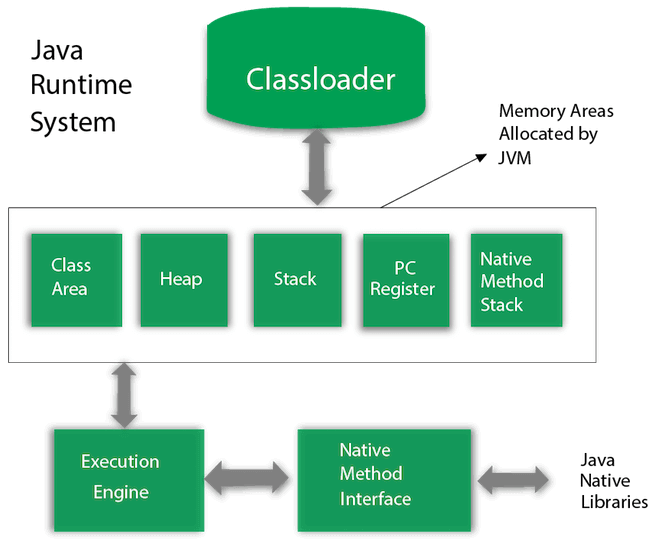
JVM(Java Virtual Machine)

  The JVM (Java Virtual Machine) is an essential component of the Java Runtime Environment (JRE). Its primary function is to execute Java by...